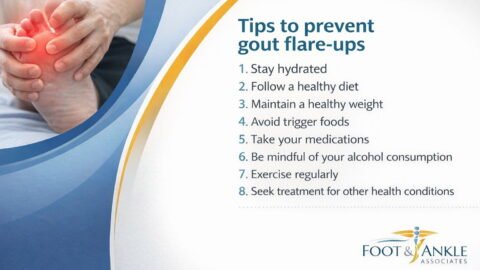

Gout can make movement feel unpredictable. One week you are walking fine, the next a sudden flare in the big toe, ankle, or knee makes even standing painful. The good news is that the right kind of exercise can work with gout, not against it. Done consistently and safely, physical activity supports healthier body weight, improves insulin sensitivity, strengthens the muscles that protect your joints, and helps you stay mobile so stiffness does not take over.
But gout is unique because timing matters. What you do during a flare is very different from what you do between flares. This guide breaks it down into practical steps and simple routines you can actually follow.
Why Exercise Helps When You Have Gout
Exercise does not “cure” gout, but it can reduce the drivers that make gout worse over time.
Key benefits
• Supports weight loss and healthy body composition, which is recommended for many people with gout who are overweight or obese
• Improves joint support by strengthening the muscles around ankles, knees, hips, and feet
• Increases circulation and overall fitness so daily activity feels easier
• Helps reduce overall inflammation and improves cardiometabolic health, which matters because gout commonly overlaps with high blood pressure, insulin resistance, and high triglycerides
• Improves balance and flexibility, lowering the risk of falls and foot or ankle strain
A practical benchmark for general health is aiming for at least 150 minutes per week of moderate intensity activity plus muscle strengthening on 2 days per week, adjusted to your symptoms and fitness level.
The Golden Rule: Do Not Train Through a Gout Flare

A flare is not the time to “push through.” During an active gout attack, the joint is inflamed and sensitive, and high load movement can worsen pain and delay recovery. Many patient education resources advise resting the affected joint during a flare and resuming activity gradually after symptoms settle.
What to Do During a Flare: Movement Without Making It Worse
Your goal during a flare is to protect the joint, maintain circulation, and prevent stiffness elsewhere.
During a flare, focus on
• Resting and elevating the painful joint when possible
• Gentle range of motion for joints that are not flaring, such as slow ankle circles on the unaffected side or easy knee bends if the knee is not involved
• Upper body movement if your flare is in the foot or ankle, such as seated light resistance training
• Short, easy walks only if you can do them without limping and without increasing pain afterward
Avoid during a flare
• Running, jumping, skipping, or fast stair climbing
• Long walks that change your gait
• Heavy leg strength training if the flare is in the lower body
• Any movement that increases pain, swelling, heat, or throbbing in the joint
Best Exercises for Gout Between Flares: 10 Safe Moves With Step by Step Instructions
Between flares is the best time to train because the joint is calm and you can build strength and mobility without triggering pain. The safest plan combines low impact cardio, joint friendly strength training, and gentle mobility. Below are 10 of the best exercises with clear steps so you know exactly how to do each one.
Safety Rules Before You Start
• Train only when the joint is not hot, swollen, or sharply painful
• Keep every movement in a pain free range
• Move slow and controlled, no sudden bursts
• If you limp during or after exercise, reduce intensity or stop
• Progress gradually by time first, then difficulty
1) Comfortable Pace Walking

Best for: General fitness, weight control, circulation, stiffness
How often: 3 to 5 days per week
How long: Start 10 to 20 minutes, build to 30 to 45 minutes
Steps
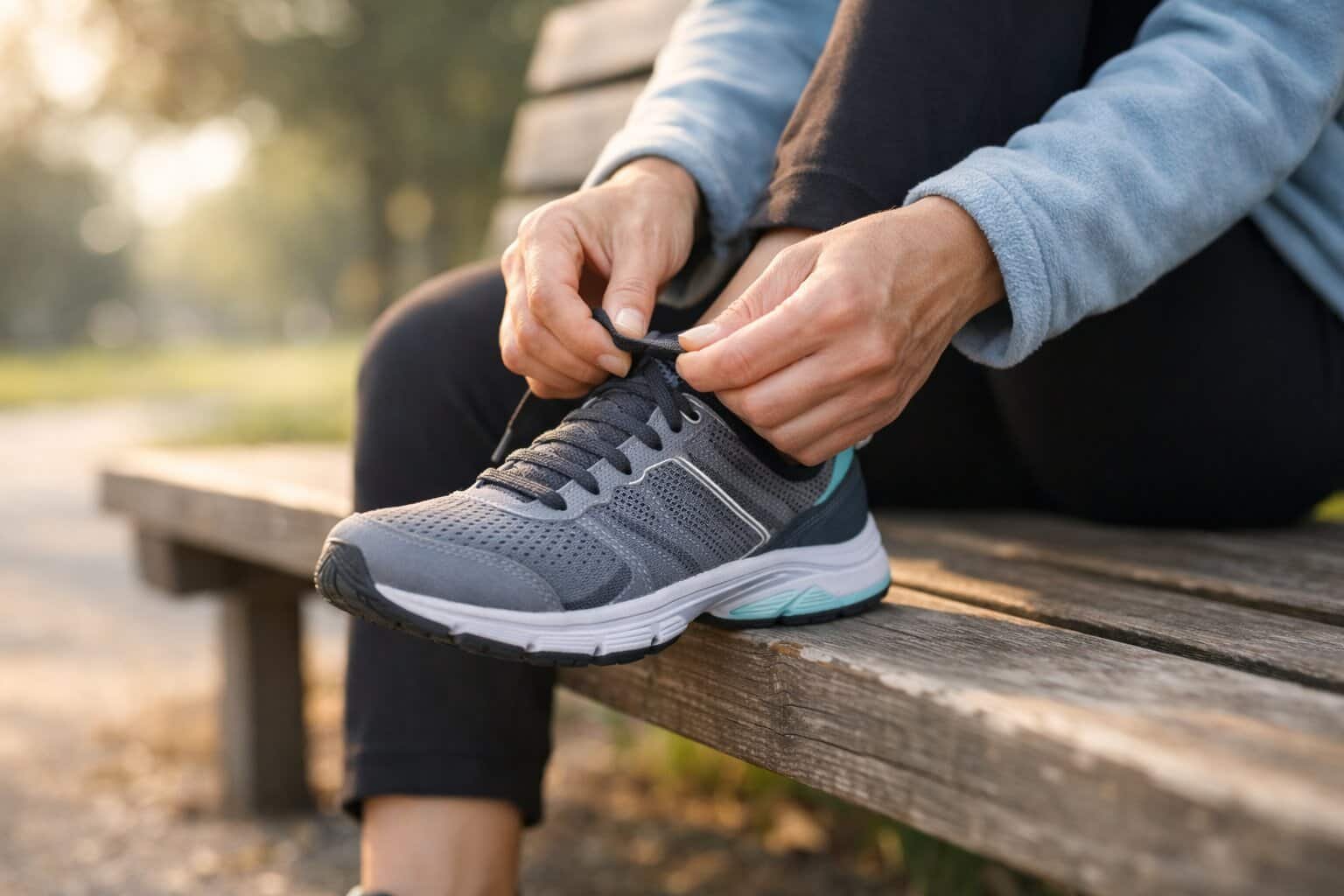
• Wear supportive shoes with a roomy toe area
• Start with 3 minutes of easy pace to warm up
• Walk on flat ground and keep steps short and quiet
• Keep your chest up and shoulders relaxed
• If you feel toe or ankle pressure, slow down and shorten steps
• Finish with 2 to 3 minutes slow walking to cool down
Do not do long fast walks early if you are just coming back after a flare.
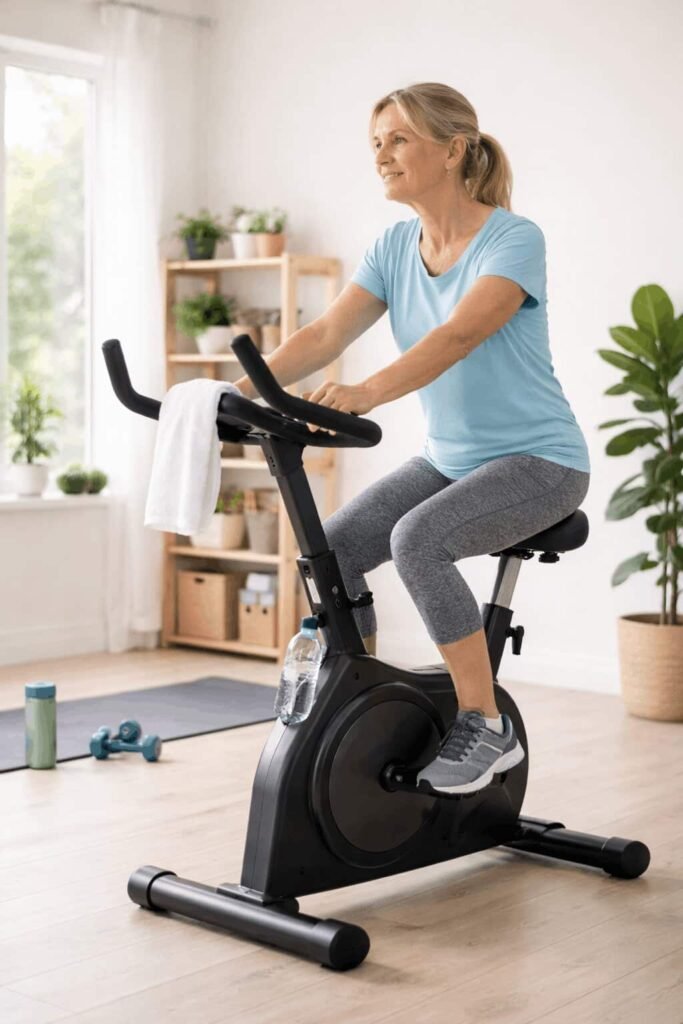
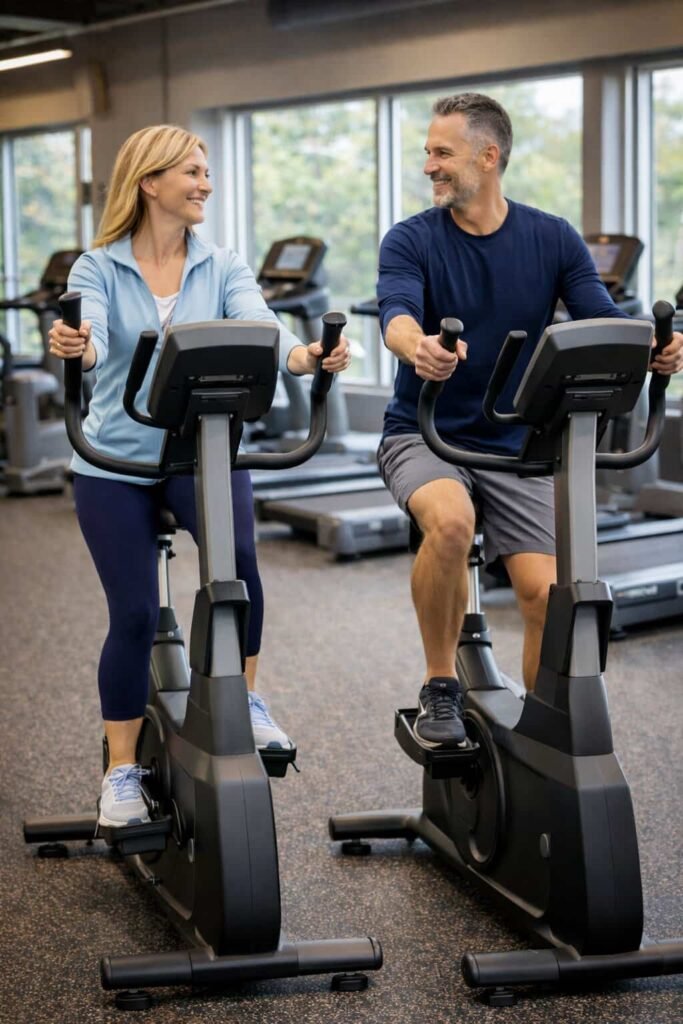
2) Stationary Cycling

Best for: Cardio without foot pounding
How often: 3 to 5 days per week
How long: 10 to 25 minutes
Steps
• Adjust seat height so your knee stays slightly bent at the bottom of the pedal
• Start with light resistance for 3 to 5 minutes
• Pedal smoothly at a steady pace you can maintain
• Keep your heels down and avoid pushing hard through the toes
• Add resistance only when you can cycle without foot discomfort
• Cool down 2 to 3 minutes at easy pace
3) Water Walking or Easy Swimming
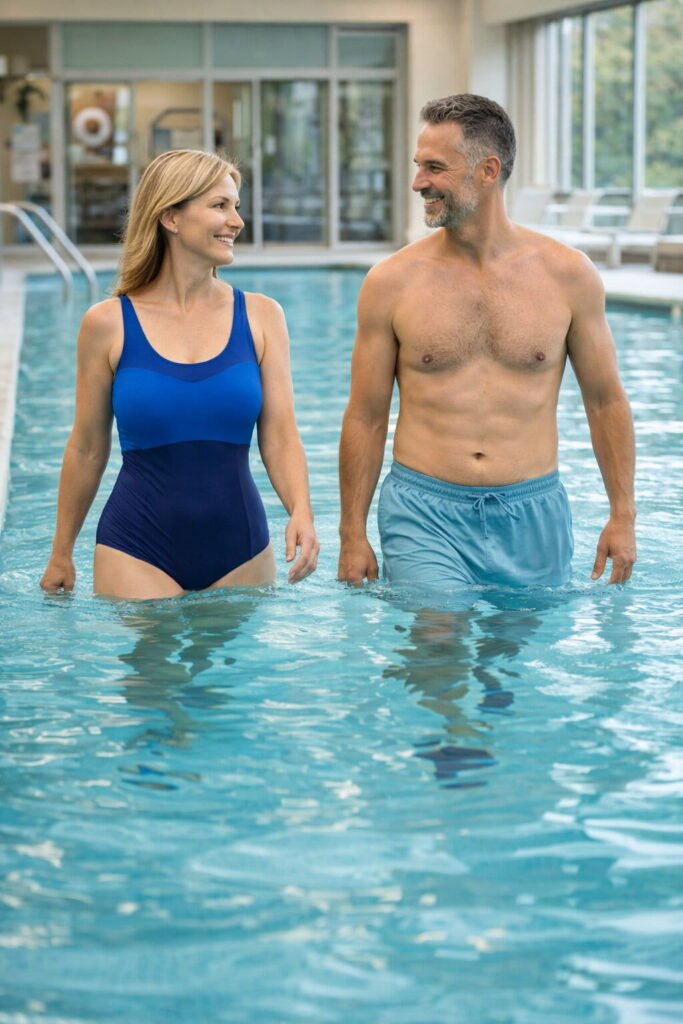
Best for: Toe, ankle, knee sensitivity
How often: 2 to 4 days per week
How long: 15 to 30 minutes
Steps
• Enter the pool slowly and use the handrail
• Start with water walking in chest to waist deep water
• Keep posture tall and take controlled steps
• Move arms naturally to assist balance
• Keep a steady pace, no sprinting
• If you swim, choose easy strokes and take breaks as needed
• Exit carefully and avoid jumping out
4) Elliptical at Low Resistance
Best for: Low impact cardio when walking irritates the foot
How often: 2 to 4 days per week
How long: 10 to 20 minutes
Steps
• Set resistance low and choose a steady speed
• Place your whole foot on the pedal, not just the front
• Keep hips level and avoid bouncing
• Hold handles lightly, do not lean forward
• If forefoot pressure increases, reduce speed or stop
• Cool down slowly for 2 minutes
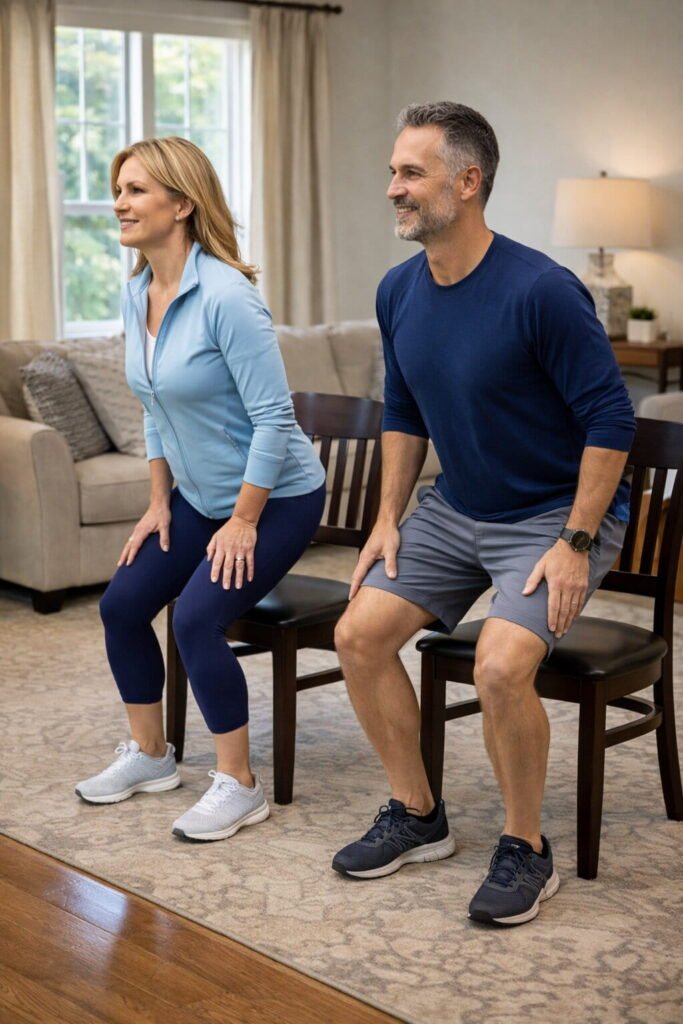
5) Sit to Stand from a Chair
Best for: Glutes, thighs, knee support, daily strength
How often: 2 days per week
Sets and reps: 2 to 3 sets of 8 to 12
Steps
• Sit on a stable chair, feet hip width apart
• Place feet slightly behind knees so you can stand smoothly
• Lean forward slightly, tighten core
• Stand up by pressing through heels and midfoot
• At the top, stand tall and squeeze glutes gently
• Sit back down slowly with control
• Rest 45 to 60 seconds and repeat
Make it easier: Use a higher chair or push lightly from armrests.
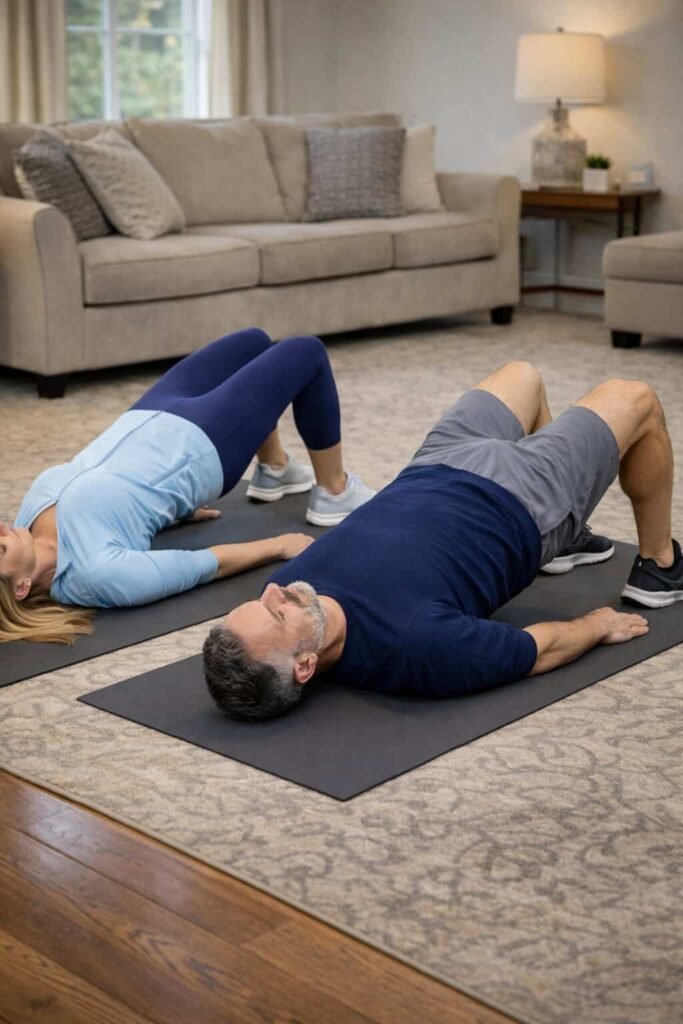
6) Glute Bridge
Best for: Hip stability, lower body support, less stress on feet
How often: 2 days per week
Sets and reps: 2 to 3 sets of 10 to 15
Steps
• Lie on your back, knees bent, feet flat
• Keep feet about hip width apart
• Tighten your core and gently tuck pelvis
• Push through heels and lift hips until body is in a straight line from shoulders to knees
• Hold 1 to 2 seconds
• Lower slowly back down
• Repeat with smooth rhythm
Avoid over arching the lower back.
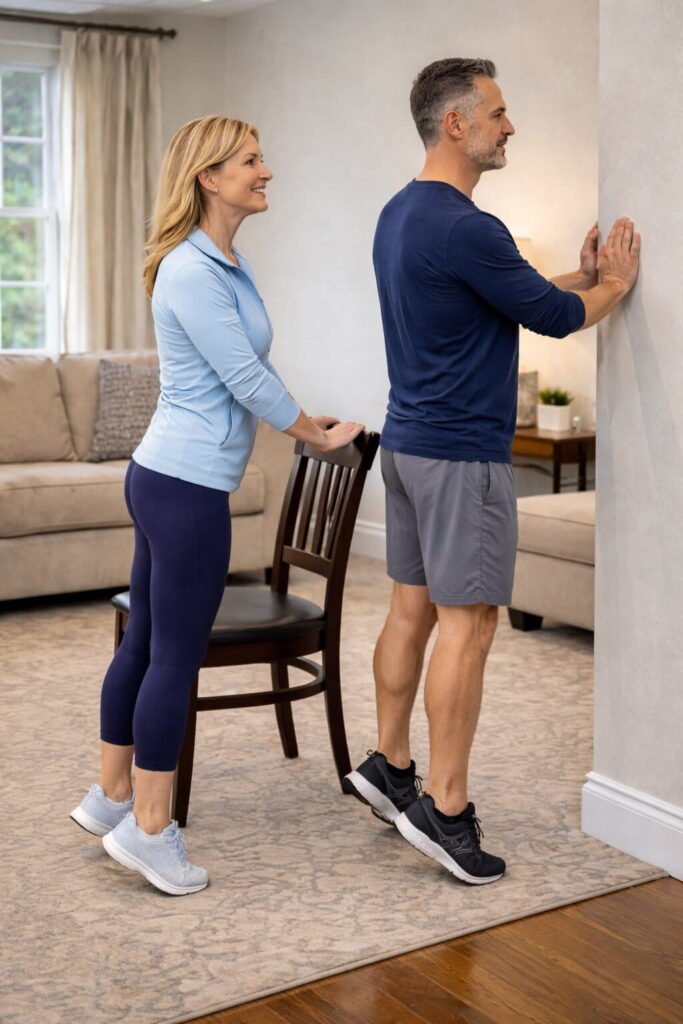
7) Standing Calf Raise With Support
Best for: Ankle support, walking strength
How often: 2 days per week
Sets and reps: 2 sets of 8 to 12
Steps
• Stand near a wall or chair for balance
• Feet hip width apart, weight evenly spread
• Slowly rise onto the balls of your feet
• Pause briefly at the top
• Lower down slowly until heels touch the floor
• Rest and repeat
If the big toe joint is sensitive: Do smaller range or skip and choose ankle band work instead.
8) Band Row or Seated Row
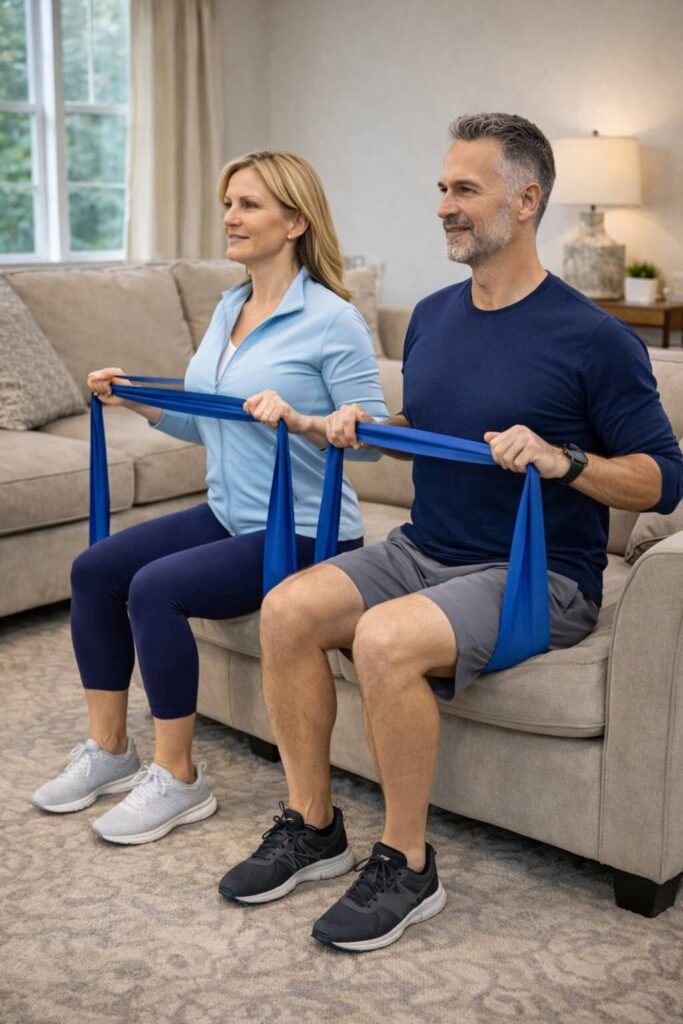
Best for: Upper back strength without stressing foot joints
How often: 2 days per week
Sets and reps: 2 to 3 sets of 10 to 12
Steps
• Sit tall or stand comfortably without foot pain
• Hold resistance band with both hands
• Start with arms straight and shoulders relaxed
• Pull elbows back, squeezing shoulder blades together
• Keep neck long, do not shrug
• Return slowly to start
• Repeat with control
9) Ankle Mobility: Ankle Circles and Alphabet
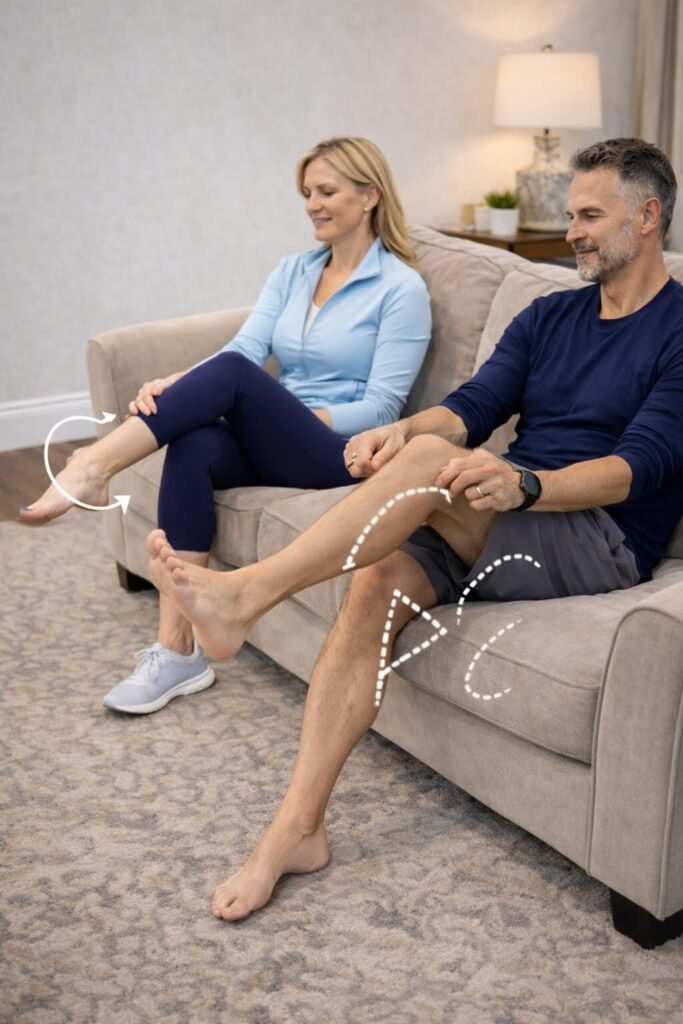
Best for: Stiff ankles, better walking mechanics
How often: Daily
Time: 2 to 4 minutes total
Steps
• Sit comfortably with one leg extended slightly
• Rotate ankle slowly clockwise 10 times, then counterclockwise 10 times
• Next, draw the alphabet in the air using your toes as a pointer
• Keep movements slow and pain free
• Repeat on the other side
This helps maintain motion without heavy load.
10) Calf Stretch and Big Toe Friendly Foot Stretch
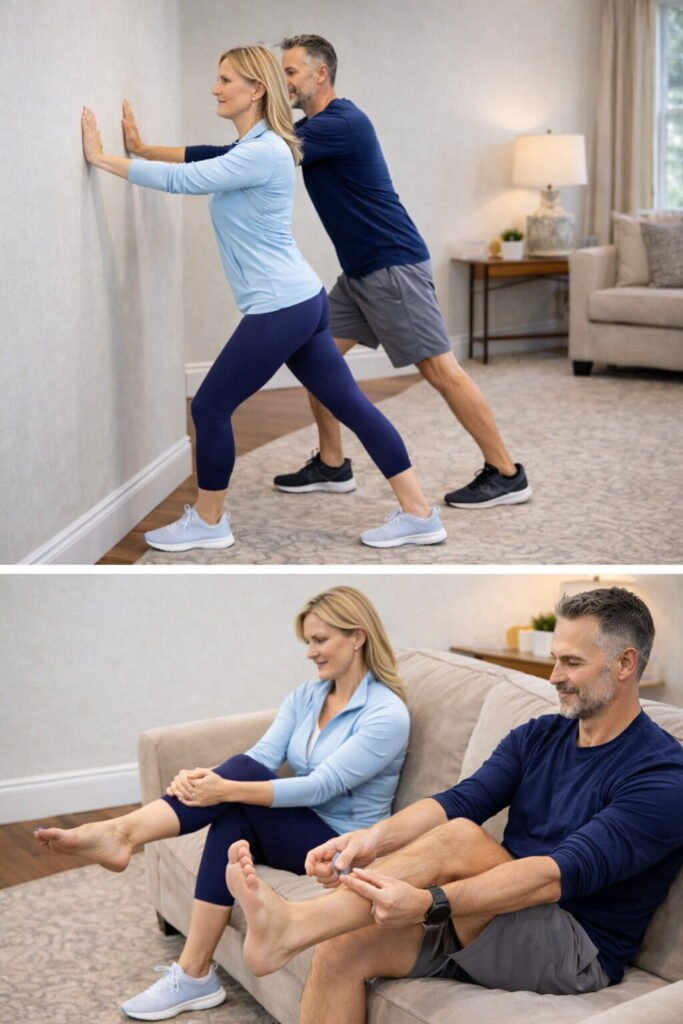
Best for: Tight calves, foot stiffness, better stride
How often: Daily
Time: 3 to 5 minutes
Calf stretch steps
• Face a wall and place hands on it
• Step one foot back, heel down, toes forward
• Bend front knee while keeping back knee straight
• Hold 20 to 30 seconds
• Switch sides and repeat 2 times each
Foot stretch steps
• Sit down and gently move toes up and down with your hand
• Keep it mild, never force into pain
• Do 30 to 45 seconds per foot
How to Progress Without Triggering Problems
• Increase time first, then intensity
• Add 5 minutes to cardio per week if joints stay calm
• For strength work, add 1 to 2 reps per set before adding resistance
• If next day joint pain or swelling increases, reduce volume by 30 to 50 percent for one week
Table: Exercise Options Ranked by Joint Stress
| Goal | Lower joint stress options | Use caution with | Higher joint stress options |
|---|---|---|---|
| Cardio fitness | Swimming, water walking, cycling, easy walking | Elliptical, incline walking, hiking on uneven ground | Running, sprinting, jumping workouts |
| Strength | Bands, machines, seated or supported exercises | Free weights with balance demands | Heavy lifts that force painful foot loading |
| Mobility | Gentle stretching, range of motion, yoga modifications | Deep toe bends if toe joints are sensitive | Aggressive stretching into pain |
The “Pain and Swelling” Check: Your Built In Safety System
Use this simple rule to avoid setbacks.
Green light
• Mild muscle fatigue is fine
• Joint feels the same or better after exercise
• No increase in swelling or warmth
Yellow light
• Pain increases during exercise but settles within a few hours
• Slight stiffness the next morning
Action: reduce intensity, reduce duration, or switch to water based movement
Red light
• Pain increases and stays worse into the next day
• Swelling, heat, or throbbing increases
• You start limping
Action: stop and rest, return to gentle movement, and consider medical advice if symptoms suggest a flare
A Simple Weekly Exercise Plan for Gout
This plan assumes you are between flares and can walk comfortably. Adjust the days to your schedule.
Week structure
• 3 to 5 days: joint friendly cardio
• 2 days: strength training
• Daily: short mobility routine
Table: Beginner to Intermediate Progression
| Week | Cardio target | Strength target | Mobility target |
|---|---|---|---|
| 1 to 2 | 10 to 20 minutes, 3 to 4 days per week | 1 to 2 days, light and controlled | 5 to 8 minutes daily |
| 3 to 4 | 20 to 30 minutes, 4 days per week | 2 days, add one extra set | 8 to 10 minutes daily |
| 5 to 8 | 30 minutes, 4 to 5 days per week | 2 days, gradual load increase | 10 minutes daily |
For overall health, many adults aim for about 150 minutes per week of moderate intensity activity plus 2 days of strengthening, but with gout you should build up gradually and stay symptom guided. (CDC)
Sample Routines You Can Use Today
Routine A: Easy cardio day
• 5 minute warm up walk
• 10 to 25 minutes brisk walking or cycling
• 3 minutes gentle calf stretch and ankle mobility
Routine B: Strength day, lower body friendly
Do 2 to 3 rounds, rest as needed
• Sit to stand from a chair, 8 to 12 reps
• Glute bridge, 10 to 15 reps
• Resistance band row or light dumbbell row, 10 to 12 reps
• Standing calf raise holding support, 8 to 12 reps if pain free
• Dead bug or plank from knees, 20 to 40 seconds
Routine C: Mobility mini routine, daily
• Ankle circles, 30 seconds each side
• Calf stretch against wall, 30 seconds each side
• Toe spreads and gentle toe flex, 30 to 60 seconds
• Hip flexor stretch, 30 seconds each side
Common Mistakes That Trigger Setbacks
• Doing intense workouts right after a flare ends instead of easing back in
• Starting with long walks that change your gait and overload the foot
• Ignoring footwear support during walking sessions
• Skipping warm ups and jumping straight into load
• Training hard while dehydrated, especially in hot weather
• Using painkillers to mask pain and then overloading the joint
When to Get Medical Input Before Exercising
Consider medical advice if
• You have frequent flares, such as multiple attacks per year
• Pain and swelling look like a flare and do not improve
• You have kidney disease, heart disease, or uncontrolled blood pressure
• You are starting exercise after a long period of inactivity
• You suspect a tendon injury or fracture, especially in the foot or ankle
FAQs
Can exercise lower uric acid?
Exercise can indirectly help by supporting weight loss and improving metabolic health. It is not a replacement for urate lowering therapy when it is medically indicated, but it supports long term gout control.
Should I walk during a gout flare?
If walking makes you limp or increases pain, avoid it and rest the joint. During a flare, most people do better with rest and gentle movement that does not load the affected joint.
What is the best cardio for gout?
Swimming, water exercise, cycling, and comfortable paced walking are popular because they are low impact and easier on the feet and ankles.
Is strength training safe with gout?
Yes, when you use a pain free range of motion and start with light loads. Low intensity strength training can help support joints by improving muscle strength and stability.
Can high intensity workouts trigger gout symptoms?
Very intense training can contribute to dehydration and muscle breakdown stress, which may increase flare risk in some people. If you enjoy higher intensity workouts, build gradually, hydrate well, and avoid them when you feel warning signs.
How soon can I return to exercise after a flare?
A good rule is to return when the joint is no longer hot, swollen, and sharply painful, then start with gentle low impact movement and increase slowly over several sessions.
What stretches help gout in the feet?
Gentle calf stretching, ankle mobility, and toe range of motion drills can help maintain flexibility. Do not force deep toe bending if the big toe joint is sensitive.
Should I exercise every day if I have gout?
Daily movement is helpful, but intensity should vary. Many people do best with most days as light cardio or mobility, and only a couple of days per week for strengthening. General adult guidelines often target 150 minutes weekly plus 2 strength days, but you can scale to your tolerance. (CDC)
What shoes are best for walking with gout?
Choose shoes with a wide toe box, cushioning, and stable support. If your big toe is a common flare site, avoiding tight toe boxes can reduce pressure and irritation.
Bottom Line
Exercise is one of the most practical tools you can use to live better with gout, as long as you match the activity to your current phase. Rest and protect the joint during flares, then focus on low impact cardio, gradual strength training, and daily mobility between flares. Consistency beats intensity. Build slowly, stay hydrated, and let your symptoms guide the plan.