
Gout has a reputation for being “just painful arthritis,” but medically it’s better understood as a chronic metabolic and inflammatory condition driven by uric acid. The short, realistic answer is this:
Most people with gout can live a normal lifespan—especially when uric acid is controlled and major comorbidities are treated.
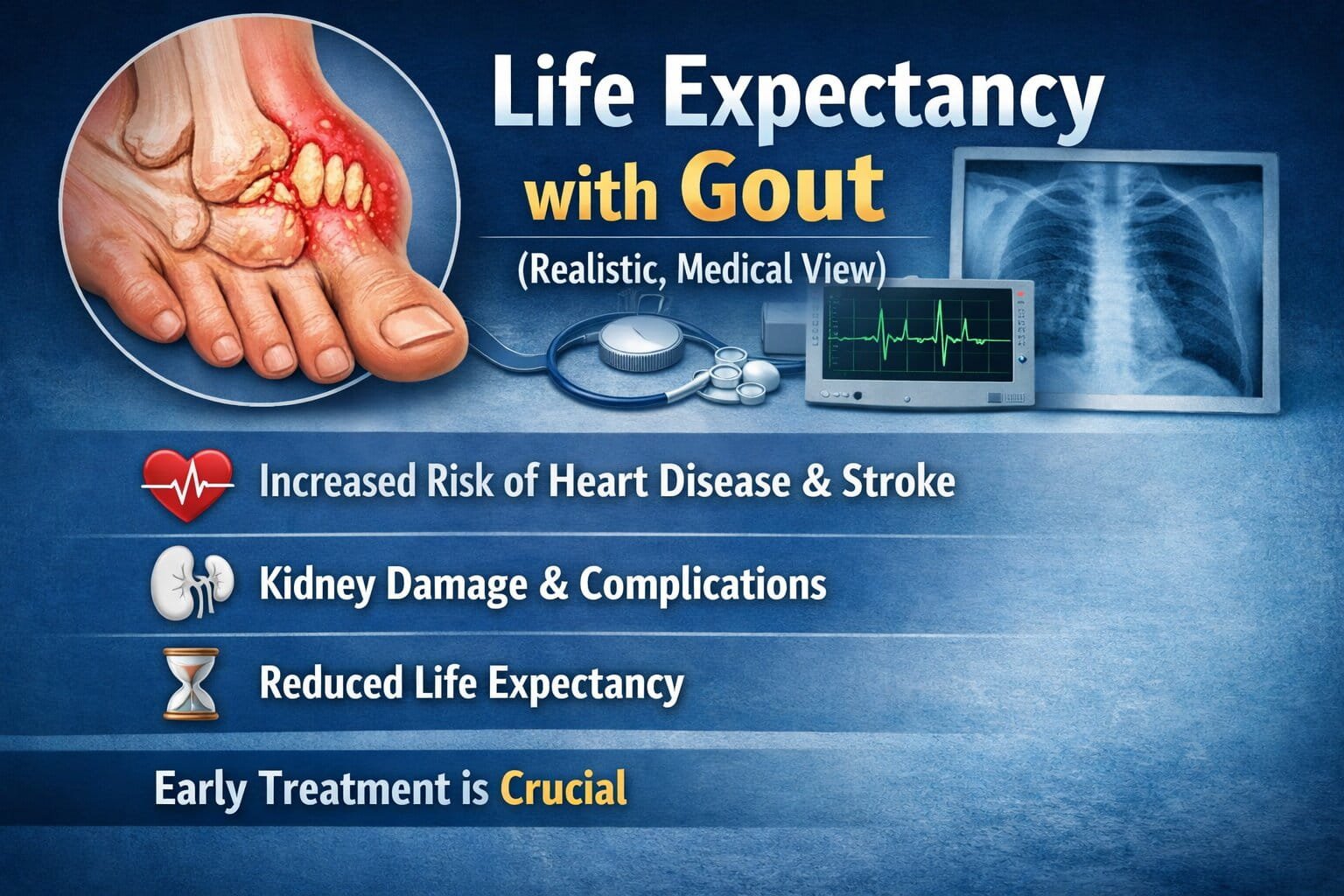
When life expectancy is shortened, it’s usually not because gout directly “kills,” but because gout often travels with—and can worsen—the same conditions that do raise long-term risk: cardiovascular disease, kidney disease, diabetes, obesity, sleep apnea, and uncontrolled high blood pressure.
This article explains what “life expectancy with gout” really depends on, what the medical evidence implies in practical terms, and what you can do to improve long-term outcomes.
What gout actually is (and why it can affect long-term health)
Gout occurs when uric acid (urate) becomes high enough in the blood that it can form needle-shaped monosodium urate crystals. These crystals deposit in joints and tissues, triggering intense inflammation.
Over time, uncontrolled urate can lead to:
- More frequent flares
- Tophi (chalky urate deposits under the skin or around joints)
- Joint erosion and deformity
- Kidney stones
- Worsening kidney function in susceptible people
While the pain is the most visible feature, the more important long-term issue is that persistent hyperuricemia and repeated inflammation often coexist with systemic health problems. That’s where longevity questions come in.
Does gout reduce life expectancy?
The realistic medical view
Gout itself is rarely the direct cause of death. However:
- People with gout have higher rates of cardiovascular and kidney disease than those without gout.
- High uric acid, chronic inflammation, and shared risk factors (like obesity and insulin resistance) can amplify long-term health risks.
- Severe, uncontrolled gout (frequent flares, tophi, high urate for years) is a marker of higher overall disease burden.
So the question isn’t “Will gout shorten my life?” but rather:
“Is my gout controlled, and are the associated conditions being managed?”
If yes, prognosis is often excellent.
The biggest drivers of prognosis (what matters most)
Below are the factors that most strongly influence long-term outcomes for someone with gout.
Table 1: What most affects long-term outlook in gout
| Factor | Why it matters | What “good control” looks like |
|---|---|---|
| Uric acid level over time | Persistent high urate drives crystal buildup, flares, tophi, and tissue damage | Sustained urate below target (commonly <6 mg/dL; lower if severe) |
| Kidney health (CKD) | Kidneys clear urate; CKD raises urate and complicates medication choices | Stable kidney function + kidney-safe urate-lowering plan |
| Heart and blood vessel disease | Gout is strongly associated with hypertension, coronary disease, stroke risk | BP controlled, lipids managed, diabetes prevented/controlled |
| Flare frequency and chronic inflammation | Repeated systemic inflammation is linked to worse outcomes | Flares become rare or absent over time |
| Tophi and joint damage | Indicates long-standing urate burden and higher complication risk | Tophi shrink and resolve with treat-to-target therapy |
| Metabolic health (weight, insulin resistance) | Obesity and diabetes increase urate and inflammation | Sustainable weight loss, better glucose control |
| Medication adherence and monitoring | Treat-to-target requires consistency and lab follow-up | Taking urate-lowering therapy (ULT) correctly; periodic labs |
| Alcohol and sugary drinks | Increase urate production and reduce excretion | Minimal alcohol; avoid frequent sugar-sweetened beverages |
Controlled vs uncontrolled gout: two very different futures
Controlled gout (best-case, very common with proper care)
When uric acid is lowered to a target and kept there consistently:
- Crystal deposits gradually dissolve
- Flares usually decrease significantly over months
- Tophi can shrink and disappear
- Joint and kidney complications become less likely
- Overall risk is driven more by general health factors than gout itself
Uncontrolled gout (what raises risk)
If urate stays high for years and flares remain frequent:
- Crystals continue accumulating
- Chronic joint damage and disability become more likely
- Tophi can ulcerate or become infected
- Kidney stones may recur
- Comorbidities are often undertreated or unrecognized
Uncontrolled gout often signals that the underlying metabolic and cardiovascular risks are also not well managed—this combination is what can meaningfully affect life expectancy.
Uric acid targets: what doctors aim for
Urate targets vary by guideline and individual risk, but a common approach is:
- Standard goal: urate below 6 mg/dL (0.36 mmol/L)
- Severe gout (tophi, frequent flares): urate below 5 mg/dL (0.30 mmol/L) is often used to speed crystal dissolution
Table 2: Typical treat-to-target strategy
| Situation | Typical urate goal | Why the goal changes |
|---|---|---|
| Early or intermittent gout | <6 mg/dL | Prevents new crystal formation and promotes gradual dissolution |
| Frequent flares (e.g., ≥2/year) | <6 mg/dL | Reduces future flare risk and inflammation burden |
| Tophi present or erosive disease | <5 mg/dL | Faster tophus shrinkage and better symptom control |
| Kidney stones (uric acid) | Individualized | May need urate control + urine alkalinization plan |
Important nuance: Starting urate-lowering therapy can trigger flares at first as crystals mobilize. This does not mean treatment is failing; it often means it’s working and needs flare-prevention support early on.
Medications that improve long-term outcomes (not just pain control)
There are two broad medication goals in gout:
- Treat flares (reduce pain and inflammation)
- Prevent disease progression (lower urate long-term)
1) Flare treatment (short-term)
Common options include:
- NSAIDs (if safe for your stomach, kidneys, and heart)
- Colchicine
- Corticosteroids (oral or injected)
These reduce suffering—but they do not remove crystals.
2) Urate-lowering therapy (ULT) (long-term, outcome-changing)
ULT helps dissolve crystals and prevent new ones.
Table 3: Common urate-lowering options (conceptual overview)
| Medication type | Examples | Main role | Key considerations (general) |
|---|---|---|---|
| Xanthine oxidase inhibitors | Allopurinol, febuxostat | Reduce uric acid production | Dose adjustment and monitoring; choice depends on history and risks |
| Uricosurics | Probenecid (where available) | Increase uric acid excretion | Less ideal with kidney stones or reduced kidney function |
| Intravenous uricase (specialist use) | Pegloticase | Rapidly lowers urate in severe refractory gout | Reserved for difficult cases; requires careful monitoring |
Why ULT matters for “life expectancy”: it’s the treatment that changes the course of disease—reducing flares, resolving tophi, and lowering the long-term complication burden. In real-world terms, it can be the difference between “a few painful episodes” and “progressive disability with systemic risk factors unchecked.”
The comorbidities that matter most (and what to do about them)
If you want the most realistic answer to longevity, focus here. Many people with gout also have:
- Hypertension
- Chronic kidney disease
- Type 2 diabetes / prediabetes
- Obesity and fatty liver disease
- High triglycerides / dyslipidemia
- Sleep apnea
- Smoking history
These conditions are major determinants of cardiovascular events and kidney outcomes. Managing them aggressively often does more for lifespan than any single gout tactic.
Table 4: High-impact actions that improve long-term outlook
| Action | Why it helps | Practical starting point |
|---|---|---|
| Control blood pressure | Reduces heart attack, stroke, kidney decline | Home BP monitoring + medication adherence |
| Improve metabolic health | Lowers inflammation, urate, diabetes risk | Gradual weight loss + strength + walking |
| Protect kidney function | Kidneys regulate urate and overall health | Avoid dehydration; review meds with clinician |
| Treat-to-target urate | Dissolves crystals, prevents progression | Consistent ULT + lab monitoring |
| Reduce alcohol and sugary drinks | Both raise urate and cardiometabolic risk | Cut binge drinking; replace soda/juice with water |
| Sleep apnea evaluation | Linked to hypertension and metabolic stress | Screening if loud snoring/daytime sleepiness |
| Smoking cessation | Major survival benefit | Structured quit plan + supports |
Diet and lifestyle: helpful, but not the whole story
Lifestyle changes can meaningfully reduce flare risk and improve metabolic health, but for many people—especially those with frequent flares or tophi—diet alone won’t reliably reach urate targets.
What tends to help most
- Weight loss (if overweight): reduces urate and improves blood pressure, glucose, and inflammation
- Limit alcohol (especially binge patterns)
- Avoid frequent sugar-sweetened beverages (fructose can raise urate)
- Prefer complex carbs and high-fiber foods
- Choose proteins wisely (more plant proteins, low-fat dairy; moderate portions of meat/seafood)
- Hydration: supports kidney urate clearance and reduces stone risk
What tends to be overstated
- The idea that gout is only caused by “eating rich food”
- The idea that “one perfect diet” cures gout for everyone
- Blaming yourself for flares—genetics, kidney handling of urate, medications, and comorbidities matter a lot
When gout is more serious: red flags that predict complications
Some features suggest higher urate burden and higher risk of long-term problems:
Table 5: Red flags that warrant tighter medical follow-up
| Red flag | Why it’s concerning | What usually helps |
|---|---|---|
| Flares becoming frequent (e.g., 2+ per year) | Suggests rising crystal burden | Treat-to-target ULT + prophylaxis |
| Tophi (visible or on imaging) | Indicates long-standing urate deposition | Lower urate goal; specialist input |
| Chronic kidney disease | Raises urate; complicates choices | Kidney-safe regimen + close labs |
| Kidney stones | Recurrent pain, kidney injury risk | Hydration + metabolic evaluation |
| Joint damage / reduced function | Disability risk | Long-term urate control + rehab plan |
| Persistent very high urate | More deposition, more inflammation | Medication titration and monitoring |
If you recognize several red flags, it doesn’t mean a poor outcome is inevitable—it means you should treat gout as a serious chronic condition, not an occasional inconvenience.
A realistic timeline: how long until gout is “under control”?
People often expect immediate results. Medically, it’s more like rebuilding than flipping a switch.
Table 6: What improvement can look like over time (typical pattern)
| Time on consistent treat-to-target plan | What many people notice |
|---|---|
| Weeks 1–8 | Possible early flares; medication fine-tuning |
| Months 2–6 | Flares begin to decline; recovery between attacks improves |
| Months 6–12 | Flares become infrequent; urate stays at goal; tophi may start shrinking |
| 1–3 years | Many reach near-zero flares; tophi can resolve; function improves markedly |
The main predictor of success is consistent urate control over time, not perfection in any single week.
FAQs
1) Can you live a normal life expectancy with gout?
Yes—many people do. When uric acid is kept at target and heart/kidney/metabolic health is managed, life expectancy can be close to normal. The bigger risks usually come from associated conditions like hypertension, kidney disease, diabetes, and cardiovascular disease.
2) Does gout itself cause death?
Rarely, directly. Gout is primarily an inflammatory arthritis caused by urate crystals. The concern is that gout commonly coexists with conditions that increase long-term mortality risk, especially cardiovascular and kidney disease.
3) Is high uric acid dangerous even if I don’t have frequent flares?
It can be. Some people have ongoing crystal deposition with fewer symptoms initially. Persistently elevated urate can still contribute to tophi, joint damage, and kidney stones over time. A clinician may recommend long-term urate control based on your overall risk profile, not flare count alone.
4) What’s the single most important number to track for long-term control?
Your serum urate level over time. Symptom control matters, but treat-to-target urate is what dissolves crystals and prevents progression. Many clinicians aim for below 6 mg/dL, sometimes below 5 mg/dL in severe cases.
5) Why do flares sometimes increase after starting urate-lowering medicine?
As urate drops, old crystal deposits can destabilize and “mobilize,” which may temporarily trigger attacks. This is common and usually managed with short-term flare prevention (often low-dose colchicine or another anti-inflammatory strategy) while continuing urate-lowering therapy.
6) If I fix my diet, can I stop medication?
Some people with mild gout can improve substantially with weight loss and reducing alcohol/sugary drinks. But many people—especially with frequent flares, tophi, very high urate, or kidney disease—won’t reach safe urate levels with diet alone. Medication decisions should be individualized and based on urate levels and flare history.
7) What complications suggest my gout is becoming severe?
Tophi, frequent flares, chronic joint pain between attacks, reduced joint function, kidney stones, or declining kidney function suggest higher urate burden and higher complication risk. These are signals to intensify long-term control rather than only treating flares.
8) Does gout mean my kidneys are failing?
Not necessarily. Many people with gout have normal kidney function. But kidney disease can both raise urate and be worsened by dehydration, stones, or certain medications. If you have gout, periodic kidney function tests are sensible.
9) Is gout linked to heart disease?
Gout is strongly associated with high blood pressure, metabolic syndrome, and cardiovascular disease. Whether urate directly causes heart disease is still debated, but clinically the takeaway is clear: if you have gout, it’s wise to take cardiovascular risk reduction seriously.
10) What’s the most realistic “best plan” to improve long-term outlook?
Think in three lanes:
- Treat-to-target urate consistently (crystal control)
- Manage comorbidities aggressively (blood pressure, glucose, lipids, kidney health, sleep apnea)
- Sustainable lifestyle upgrades (weight, hydration, alcohol/sugar reduction, activity)