

Gout attacks can feel like they appear out of nowhere, but they’re usually the result of uric acid staying elevated long enough for crystals to form and persist around joints. Long-term prevention is not just about avoiding “trigger foods.” It’s about creating a system that keeps serum urate low, reduces inflammation triggers, and supports kidney and metabolic health.
Medical note: This article is for educational purposes, not personal medical advice. If you have frequent attacks, kidney disease, kidney stones, heart disease, or take diuretics (“water pills”), speak with a clinician about your long-term prevention plan.
The real goal: stop crystals from forming (not just stop pain)
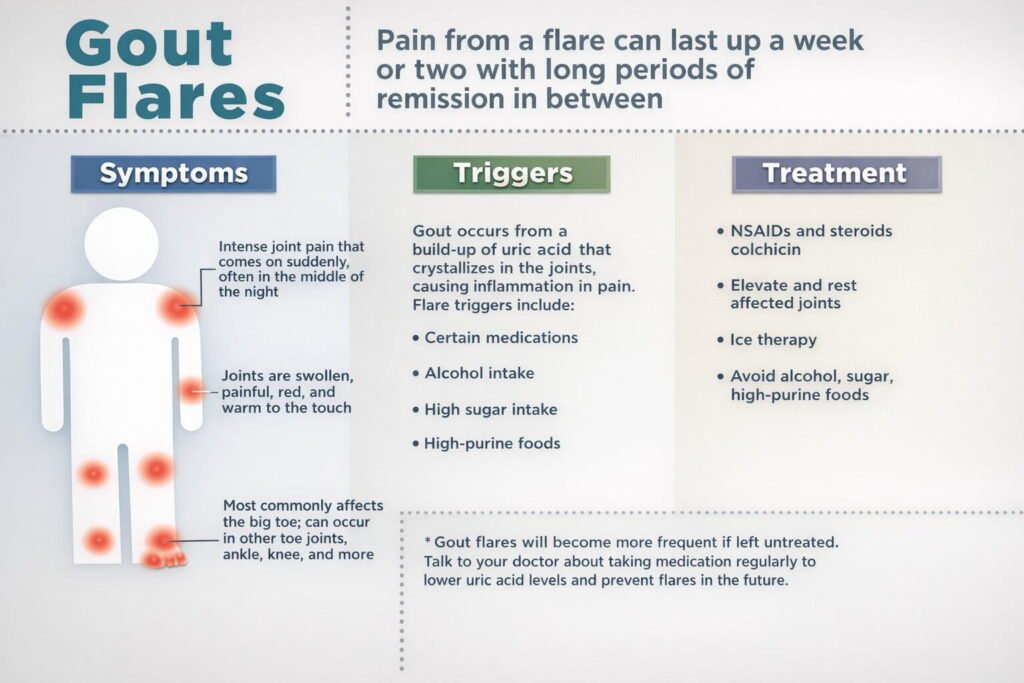
A gout flare occurs when urate crystals trigger intense inflammation in a joint. Even between attacks, crystals can remain and silently irritate tissue if uric acid stays high. That’s why long-term prevention focuses on maintaining serum urate below the level where crystals continue to form.
Many clinical guidelines support a “treat-to-target” approach, adjusting the plan to keep serum urate below 6 mg/dL for most people (some severe cases require lower targets under medical supervision).
High-impact long-term prevention (quick overview)
If you only do a few things consistently, start here:
Table: High-Impact Changes to Prevent Gout Attacks Long Term
| Priority | What to Do | Why It Helps Long Term | How Often |
|---|---|---|---|
| #1 | Keep serum urate below target with clinician-guided plan (often <6 mg/dL) | Prevents new crystal formation and helps dissolve existing crystals over time | Ongoing |
| #2 | Cut sugary drinks / fructose-heavy beverages | Reduces urate production and flare risk | Daily |
| #3 | Limit/avoid alcohol (especially beer, binge patterns) | Alcohol raises urate and can trigger flares | Weekly habit |
| #4 | Maintain steady hydration | Dehydration concentrates urate and can trigger attacks | Daily |
| #5 | Prefer low-fat dairy, plant proteins, lean proteins | Often associated with lower urate burden vs high-purine animal sources | Most meals |
| #6 | Gradual weight loss (if needed), avoid crash diets | Improves urate handling and reduces recurrence | Monthly trend |
| #7 | Review trigger meds with your doctor (e.g., some diuretics) | Some meds raise uric acid | As needed |
| #8 | Build a flare plan (early treatment, rest, ice if appropriate) | Reduces severity and duration of attacks | As needed |
Step 1: Make urate control your “anchor habit”
Lifestyle changes help, but for many people with recurrent gout, long-term control depends on keeping uric acid consistently below target. This is where a clinician-guided plan (often including urate-lowering therapy) can be essential.
If you’re a candidate for urate-lowering therapy (ULT)
People with recurrent flares, tophi, kidney stones, or chronic gout-related joint problems are often advised to use ULT long term. The key is not just taking a medication—it’s monitoring and adjusting until you reach the goal.
What to discuss with your clinician:
- Baseline tests: serum urate + kidney function (and others as needed)
- Your target urate level and how often to test
- Whether you need short-term flare prevention while starting/changing therapy
- Whether any of your current medications increase urate
Why flares can temporarily increase when starting ULT
Early in urate lowering, crystal deposits may shift and dissolve. That process can trigger flares temporarily. Clinicians often use short-term anti-inflammatory prevention strategies during this period.
Bottom line: Long-term urate stability prevents future crystal buildup. That’s the foundation.
Step 2: Follow a gout-smart eating pattern you can maintain
You do not need a perfect diet. You need a sustainable pattern that reduces common triggers and supports healthy weight, kidney function, and inflammation control.
Table: Food & Drink Guide (Preventive Focus)
| Category | Best Choices (Most Days) | Limit / Avoid (Common Triggers) |
|---|---|---|
| Drinks | Water, sparkling water (unsweetened), unsweetened tea/coffee | Soda/soft drinks, sweet juices, energy drinks, heavy alcohol |
| Proteins | Low-fat milk/yogurt, eggs, tofu, lentils/beans, chicken (moderate) | Organ meats, frequent large portions of red meat, some high-purine seafood |
| Carbs | Oats, brown rice, whole wheat, vegetables, whole fruit | Refined carbs + sugar-heavy desserts, syrupy snacks |
| Fats | Olive oil, nuts (portion-aware), seeds | Deep-fried fast foods (often + alcohol/sugar combos) |
| “Treat” pattern | Planned, small portions with hydration | Binge meals + alcohol + dehydration (highest risk combo) |
Practical plate rule (simple and repeatable)
- ½ plate vegetables
- ¼ plate whole grains or starchy veg
- ¼ plate protein (lean/plant-focused most of the time)
- Default drink: water
Step 3: Hydration is non-negotiable (especially during heat, travel, or fasting)
Dehydration concentrates urate and is a common flare trigger. People often underestimate how frequently dehydration happens: long work shifts, hot weather, travel days, fewer bathroom breaks, or illness.
Hydration habits that work:
- Drink water earlier in the day, not just at night
- Carry a bottle and sip routinely
- Add extra water on high-risk days (heat, sweating, travel)
If you have kidney disease, heart failure, or fluid restrictions, ask your clinician for a safe fluid target.
Step 4: Alcohol—choose a clear strategy, not a vague rule
Alcohol can raise uric acid and is strongly linked to gout flares, especially with binge patterns and dehydration.
Choose one approach and be consistent:
- Best prevention: avoid alcohol until urate is stable and flares are controlled
- If you drink: keep it moderate, avoid binges, and pair with hydration and food
Step 5: Weight and metabolic health (the hidden drivers)
Gout is often tied to insulin resistance, high blood pressure, fatty liver, and elevated triglycerides. Improving metabolic health can improve urate handling.
Avoid crash diets. Rapid weight loss, fasting extremes, and dehydration can worsen urate and trigger flares. Aim for slow, steady progress.
What works best long term:
- Remove sugary drinks first
- Prioritize protein + fiber at meals
- Walk daily and add strength training a few times per week
- Sleep consistently (poor sleep increases inflammation and cravings)
Step 6: Review medications and health conditions that raise uric acid
Some medications (including certain diuretics) can increase uric acid levels. Do not stop a medication on your own—ask your clinician if alternatives exist that are appropriate for your overall health.
Also, kidney disease changes how uric acid is cleared. If you have reduced kidney function, gout prevention requires more careful monitoring.
Step 7: Find your personal triggers (and stop repeat surprises)
General triggers are helpful, but your own pattern matters most. Track for 4–6 weeks and you’ll often find repeat causes.
Table: Your Trigger Tracker (4–6 Week Template)
| Date | Joint | What Happened 24–48h Before | Alcohol | Sugary Drinks | Big Meat/Seafood Meal | Hydration Low? | Poor Sleep/Stress | Notes |
|---|---|---|---|---|---|---|---|---|
Tip: Most people discover “trigger combinations,” not single foods—like alcohol + dehydration + heavy meal.
Step 8: Use “If-Then rules” to lock in prevention
When prevention is automatic, flares drop. If-then rules remove decision fatigue.
Table: If-Then Prevention Rules (Easy to Follow)
| If This Is True… | Then Do This… |
|---|---|
| You’re traveling or in hot weather | Add extra water + avoid alcohol/sugary drinks that day |
| You’re going to eat a heavier meal | Keep alcohol off, drink water, keep portion reasonable |
| You’re starting urate-lowering therapy | Ask about short-term flare prevention plan and urate monitoring |
| You feel early flare signs | Use your clinician-approved flare plan early; rest the joint |
| You’re losing weight | Keep it gradual; avoid fasting/crash dieting patterns |
Step 9: Exercise consistently (but protect vulnerable joints)
Exercise helps weight, insulin sensitivity, and cardiovascular health—key factors tied to gout recurrence. The best routine is the one you can keep.
Joint-friendly plan:
- Walking, cycling, swimming: 3–5x/week
- Strength training: 2–3x/week
- Avoid sudden intensity spikes
- During a flare: rest the joint and follow your clinician’s plan
Als read: Exercise for Gout
Frequently Asked Questions
How long does it take to reduce flare frequency?
If serum urate stays below target consistently, crystal burden can reduce over time and flares often become less frequent. Some people still experience early flares during the first months of urate-lowering treatment.
Is diet alone enough to prevent gout long term?
For some people with mild and infrequent gout, lifestyle changes may help significantly. But many people with recurrent gout need urate-lowering therapy to reliably keep urate below target.
Do I need to avoid all meat and seafood forever?
Not necessarily. The most consistent strategy is limiting high-risk foods (especially organ meats) and controlling portions while building an overall eating pattern that supports urate control and healthy weight.
Are sugary drinks really that important?
Yes. Sugary drinks and fructose-heavy beverages are one of the highest-impact modifiable triggers. Removing them is often a game-changer.
Conclusion: the long-term gout prevention formula
Long-term gout prevention works best when you focus on three pillars:
- Control serum urate to a target and keep it stable (often needs monitoring and clinician guidance).
- Remove the biggest triggers: sugary drinks, heavy alcohol patterns, dehydration, organ meats, frequent large portions of red meat.
- Build lifestyle stability: hydration, gradual weight change if needed, consistent movement, and good sleep.
If you want, share:
- how often you get gout attacks (monthly, yearly, etc.),
- which joint is most affected,
- whether you have kidney issues or high blood pressure meds,